
Here we are again, looking at old newspapers and trying to learn more about the people, places, and things of older times. We have chosen some eclectic snapshots of time. So, grab a cup of your favorite hot tea (it sure is cold enough out for it now) and don’t forget the biscuits! Or cookies! Or whatever you like with your tea! Enjoy!
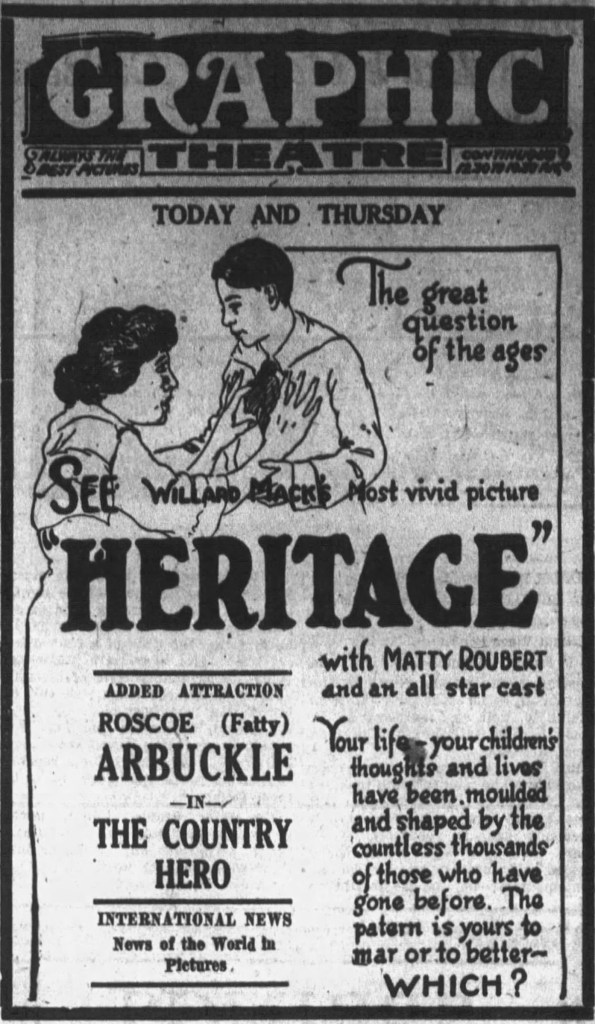
Graphic Theatre Listing, The Bangor Daily News (Bangor, Maine), July 27, 1921
Time to go to the movies! What’s playing at the moving picture show?
Well, at the Graphic Theatre in Bangor, Maine on July 27, 1921 the headlining movie was a 1920 silent drama film called called Heritage, which was directed by William Leonard Roubert (1879-1953) and starred his son, Matthew “Matty” Roubert (1907-1973) and Herbert Standing (1846-1923). This film follows the drama of a stable hand who is fired from his job and then kidnaps his former employer’s infant son, as a form of revenge. The film follows the subsequent formative years and the effect of finding out his true identity.
It’s unclear how popular this film was, but a print of it is in the Library of Congress, so that’s cool.
The second film featured is the 1917 silent comedy film, The Country Hero, starring Roscoe “Fatty” Arbuckle (1887-1933) and Joseph “Buster” Keaton (1895-1966).
Arbuckle also wrote and directed this film.
Arbuckle stars as a blacksmith in an imaginary rural village. He has a rivalry with another businessman over the affections of a local woman. A city man unites the two rivals when he tries to steal the girl. At the annual village ball, amateur talent many different vaudeville stunts including, Buster Keaton as a wriggling Fatima who charms a long black stocking from a cigar box like a snake. This film is considered lost and will never be seen again.
But wait! What about the Graphic Theatre?
The Graphic Theatre was one of many theatres located in Bangor, Maine in the 1920s. It opened on February 22, 1909 and showed films and hosted many Vaudeville and stage productions. It was bought by Paramount Pictures in the early 1940s and operated until about 1960, when the theatre closed for good. The building was demolished sometime after that. Fun fact: When The Graphic Theatre opened in 1909, a person could buy a ticket to see a show for 5 cents, which is about $1.52 in 2023 money. Not too bad.

Lyon & Healy Advertisement, The St. Joseph Daily Herald (St. Joseph, Missouri), January 3, 1890
Any guitar players out there? George Washburn Lyon (circa 1825-1894) and Patrick Joseph Healy (1839-1905) started Lyon & Healy, which worked with publishers of sheet music in 1864 in Chicago, Illinois. By the next year, 1865, the company had started producing reed organs and some smaller instruments. Lyon & Healy’s early history is hard to pin down as their company records were destroyed in a series of fires, including the Great Chicago Fire. However, by the date of the above advertisement, it is very clear that the company was making Washburn guitars (as well as many other stringed and fretted stringed instruments.) The address given, 162 State Street, is no longer the headquarters of Lyon & Healy (which still exists) or Washburn Guitars (which still exists, of course), but to give you an idea of how centrally located it was, the building was located a few city blocks from the Chicago City Hall. (the City Hall has been reconstructed, but it is at the same site.) It should be noted that George Lyon retired the year before this advertisement ran in the paper and the company was then run by Patrick Healy who ushered the company into a period of expansion. Lyon and Healy are both buried in Cook County, Illinois.
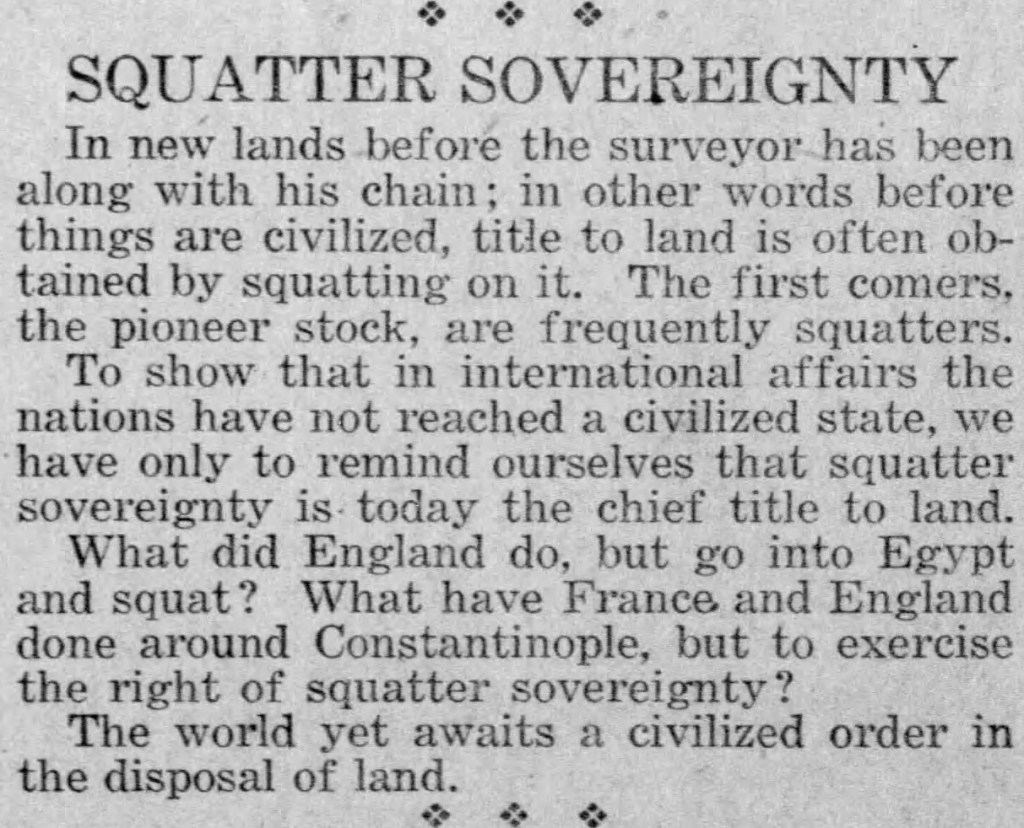
Squatter Sovereignty, Seattle Union Record (Seattle, Washington), March 20, 1920
Yes, England and France were squatters around the world, but one should not have to look far when you see how the United States was populated to see how squatting like that is just colonization.
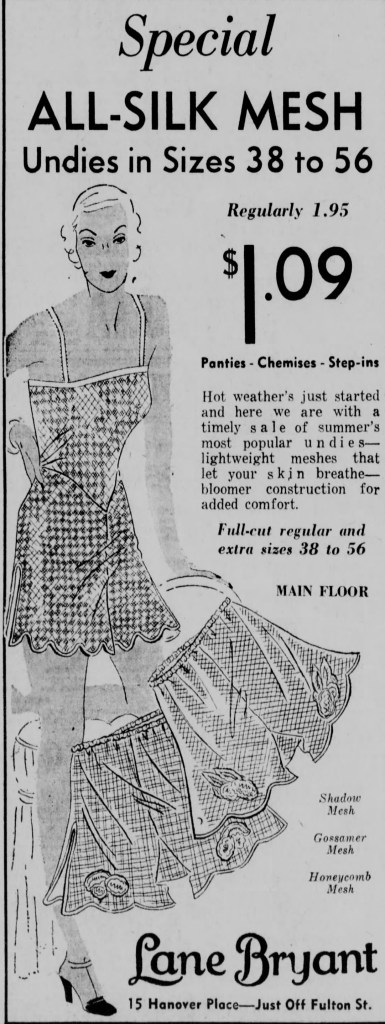
Lane Bryant Advertisement, The Brooklyn Daily Eagle (Brooklyn, New York), June 27, 1933
At the time of this advertisement, Lane Bryant had been in business for about 29 years. Originally the company produced a limited line of maternity clothes that were designed by Lithuanian immigrant Lena (Himmelstein) Bryant (later Malsin) (1877-1951) in New York City. At the point of this advertisement in 1933, they had expanded to included many different designs and was a true pioneer of “plus-sized” clothing.

Reagin-Denton Advertisement, The Tampa Tribune (Tampa, Florida), May 22, 1921
The Hupmobile was built in by the Hupp Motor Car Company, headquartered in Detroit, Michigan and was produced for about 30 years, starting 1909. Really cool cars for the time and great for city cruising (the company only offered models with 4 cylinder engines for much of the company’s existence.) But the Great Depression, the fact that the company turned it’s back on it’s established clientele by offering more models, and low production volume combined to lead the company to close in 1940. One wonders how much money a mint Hupmobile goes for today. For anyone who wants to know, the address given above for the Reagin-Denton Motor Company in Tampa, Florida is now the Tampa Federal Courthouse.
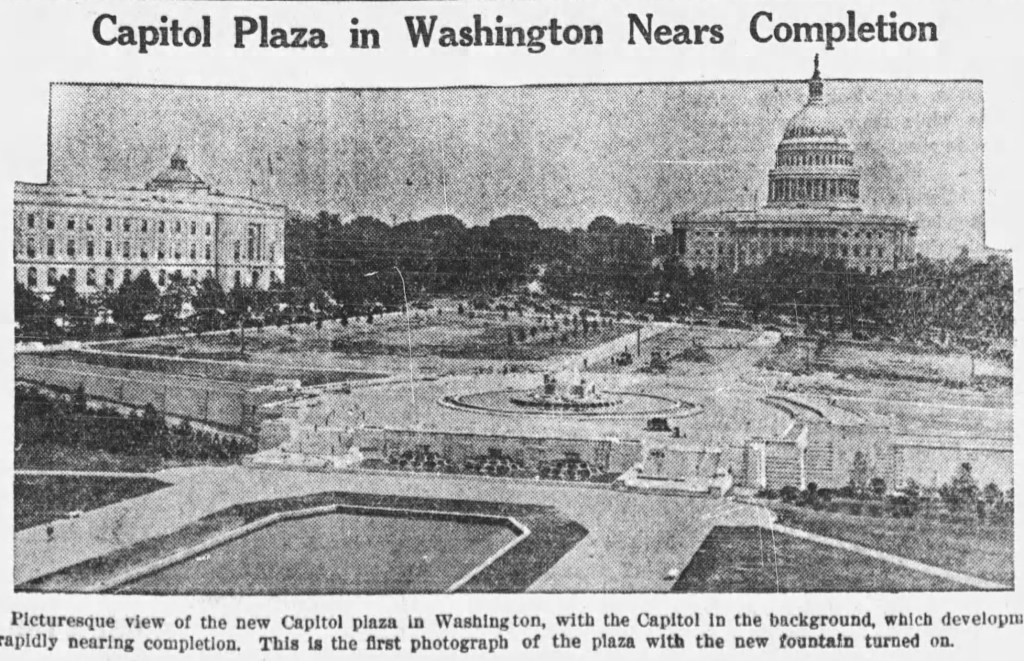
Capitol Plaza in Washington Nears Completion, The Lehi Free Press (Lehi, Utah), September 15, 1932
The Senate Fountain still flows at Upper Senate Park in Washington DC. The park is on the North side of the capital building. The photograph above shows most of Upper Senate Park, while the pond in the foreground is in Lower Senate Park. The pool is also still intact and full of water, which is ironic since far too many of the the people in the U.S. Senate are full of something else.
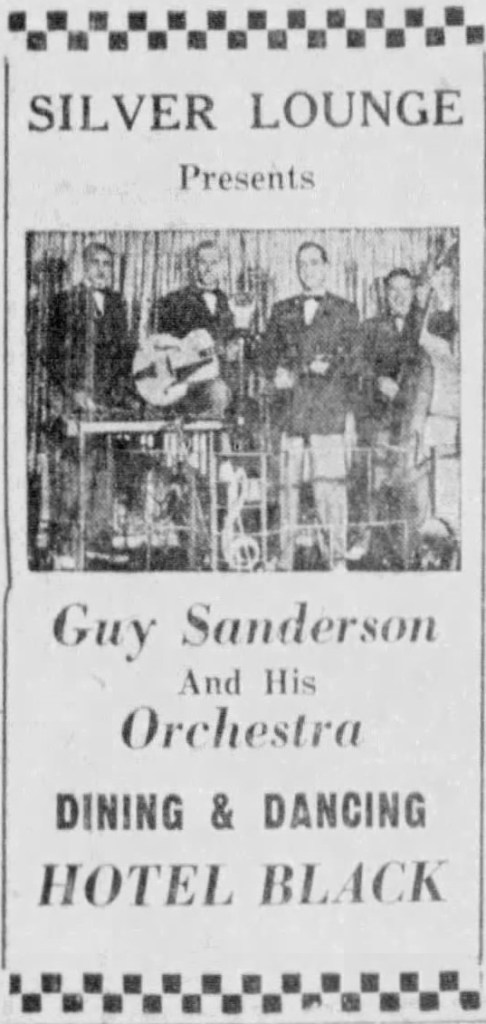
Silver Lounge Presents, The Oklahoma City News (Oklahoma City, Oklahoma), November 14, 1941
Built in 1930, Hotel Black was opened in 1931 at 1 North Hudson Ave., Oklahoma City, Oklahoma. The hotel was built in response to the hotel boom, which was a response to the oil boom. For a time, it was the place to be, but it experienced a horrible downslide in the 1960s. It finally closed in 1976. In 1979, the building was purchased and renovated into offices. The building finally saw it’s end in 2015 when it was imploded to make way for the BOK Park Plaza.
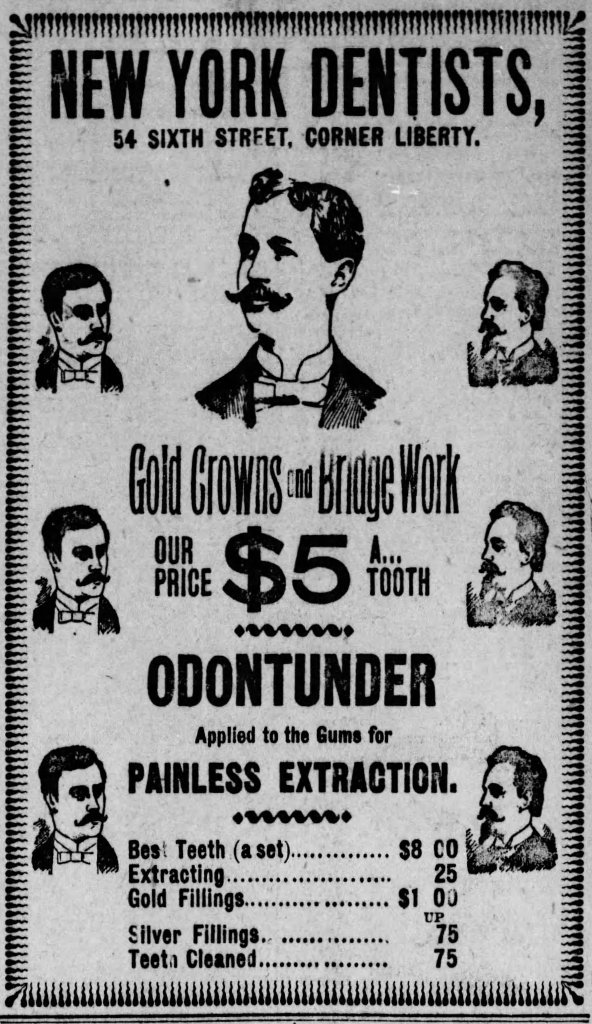
New York Dentists Advertisement, The Pittsburgh Press (Pittsburgh, Pennsylvania), August 30, 1896
Nobody real likes dental work, but what about dental work in 1896? Need a gold crown or some bridge work? That is going to hurt like hell. This particular dentist office (and many others at the time, used “Odontunder” applied to the patient’s gums for pain relief. But what is “Odontunder?” It was used as a local aneshetic and it’s proprietary mixture included a 1.35% concentration of cocaine. That’ll take the pain away and keep them coming back for more!
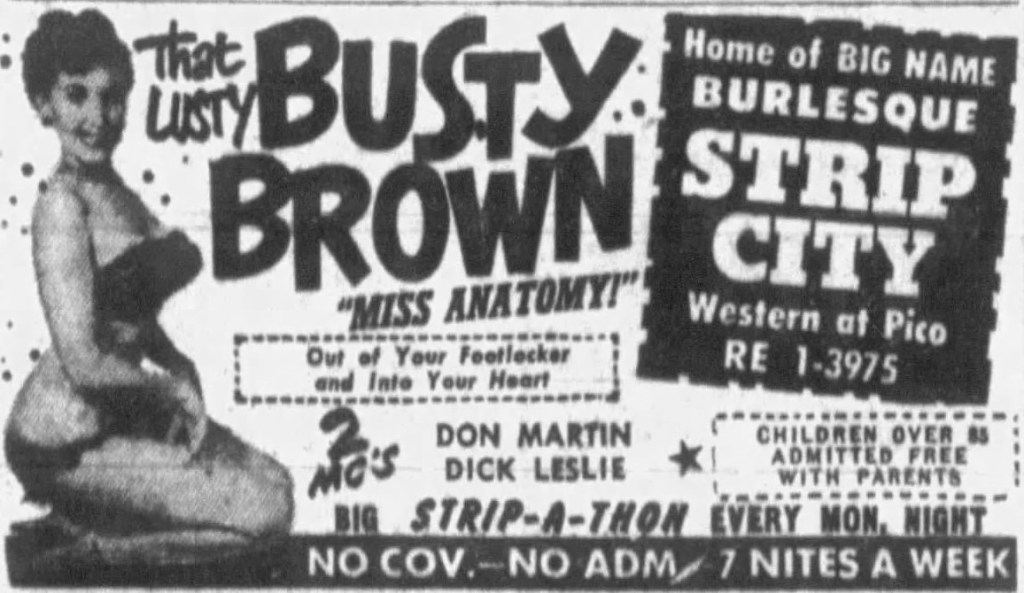
That Lusty Busty Brown Show Listing, The Mirror and Daily News (Los Angeles, California), May 7, 1955
So, let’s end this post with a little vintage burlesque. There isn’t much to say about this show listing as everything offered is laid out accordingly. One thing that is for sure: Strip City and later co-owner Donna Mae “Busty” Brown made a huge impact on the culture of Los Angeles.
Here we are at the conclusion, my friends. Thank you for joining us on our brief trip back in history. Be safe and remember to love one another.
During our genealogical research, CMS Research & Genealogy comes across many stories that have nothing to do with our current project. We have tons of them and will be sharing them all with you on this blog. All the more reason to come back and visit us again!
December 13, 2023


We would love to hear from you!
Don’t Forget To Subscribe!
Check out our archives for more reading material!
- October 2025
- July 2024
- June 2024
- February 2024
- January 2024
- December 2023
- November 2023
- June 2023
- May 2023
- April 2023
- March 2023
- February 2023

 CMS Research & Genealogy
Leave a comment